Monday, 23 February 2015

Tuesday, 4 March 2014
Indonesia Historical
The Killings of 1965-66 Indonesia
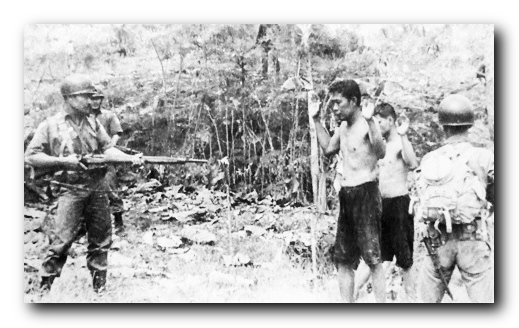 |
Prisoners captured during the Trisula OperationPhotograph taken at the Museum Brawijaya by Vannessa Hearman |
In the course of little more than five months from late 1965 to early 1966, anti-communist Indonesians killed about half a million of their fellow citizens. Nearly all the victims were associated with Indonesia's Left, especially with the Communist Party (PKI) that had risen to unprecedented national prominence under President Sukarno's Guided Democracy. The massacres were presided over and often coordinated or carried out by anti-communist sections of the Indonesian army, but they also engaged wider elements of Indonesian society - both people who had reason to fear communist power and people who wanted to establish clear anti-communist credentials in troubled times.
The killings followed a coup which took place in Jakarta on the morning of 1 October 1965 in which six senior army generals were killed and a revolutionary council was formed, seizing power from Sukarno. For the whole of the New Order period, Indonesian authorities portrayed these events as a communist grab for power, which was to be followed by the wholesale slaughter of their opponents. Sceptics, by contrast, doubted the PKI's involvement and even wondered whether the coup might have been a 'black' operation by conservative forces, intended to compromise the Party. Recent research, especially by John Roosa, who writes for this issue, has shown that the PKI leadership was closely involved in the coup, but that the aims of the operation were far more limited than a seizure of power.
The destruction of the PKI was part of a process that brought Suharto's military-dominated New Order regime to power. The new regime abandoned Sukarno's leftist orientation in foreign and domestic politics and embarked on a program of western-style economic development. The New Order never concealed the fact of the killings. Rather, it portrayed them as both a justifiable response to the alleged threat presented by the PKI and as an outcome of unrestrained populist politics in the 'Old Order'. The undefined memory of massacre was thus recruited to justify the New Order's elaborate structure of political and cultural control and restriction. The alleged evil intentions of the PKI were also used to justify an enduring and vindictive persecution of Indonesians who had been associated with the Left and who survived the massacres. More than a million passed through detention camps, and some were held for ten years or more. After their release, they faced continuing restrictions on their civil rights within Indonesia and their family members - including children not even born in 1965 - faced harassment and restriction.
One of the great achievements of the post-Suharto period is the fact that it is now possible to begin the complex work of better documenting the events that occurred in 1965 and in the years that followed. This process is slow and painstaking. It is made difficult by a diminishing pool of informants, the fading memories of those who are still alive, the decay of physical evidence and continuing prejudice in local communities. Groups trying to uncover detail of the killings have at times faced official harassment and many of the formal restrictions against former communists remain in place. Significant progress has nevertheless been made, drawing on rich veins of oral history and documentary sources within and outside Indonesia.
It is now possible to begin the complex work of better documenting the events that occurred in 1965 and in the years that followed
For all this growing body of analysis, the killings themselves remain tantalisingly elusive. Direct witnesses were few, and perpetrators have for the most part remained stubbornly silent. The usual reluctance of killers to talk about what they have done is compounded by the fear of reprisals or claims for compensation. Many Indonesians, too, look back on a national history that is studded with difficult, controversial and divisive events and argue that Indonesians should instead look forward and focus on improving their future rather than dwelling on past crimes. On both sides of the Left-Right divide, moreover, there has been a feeling that a too-detailed investigation of the precise circumstances of the killings might reveal sordid, unpleasant details that would compromise the stark elegance of mainstream narratives both of communist victimhood and of communist evil. All but one of the contributors to this important edition of Inside Indonesia presented papers based on their original research at a conference on the same theme organised by Tony Reid, Doug Kammen, Kate McGregor and Vannessa Hearman and held at the Asia Research Institute in Singapore in June 2009. We would like to thank the conference organisers, who are editing a book based on the conference proceedings, for encouraging participants to also contribute to this collection. Many more researchers were involved in that conference than could possibly be showcased here.
This edition begins with an article by Brad Simpson, reminds us of the support western governments provided to the army and other anti-communist forces at this time. This is followed by Greg Fealy's account of Nahdlatul Ulama members' involvement in the events of 1965-66. Dahlia Gratia Setiyawan , Vannessa Hearman , Taufik Ahmad and Annie Pohlman follow with harrowing accounts of Communists' lives under attack, on the run and in detention camps in Java and Sulawesi, while Katharine McGregor describes the terrible pressures experienced by survivors and their supporters. John Roosa's dictionary, which offers readers insight into the mechanics of the coup itself, rounds the collection out. In these articles we get a glimpse of a terrible world that has now largely receded into memory. But the task of understanding the circumstances that could bring such misery and barbarity to a country which achieved independence with such hope for justice and prosperity remains a task for every generation.
Robert Cribb (robert.cribb@anu.edu.au) is professor of History at the Australian National University and editor of the 1990 volume, The Indonesian Killings 1965-1966: Studies from Java and Bali.
Michele Ford (michele.ford@sydney.edu.au) chairs the Department of Indonesian Studies at the University of Sydney, where she teaches about social activism and human rights in Southeast Asia.
Inside Indonesia 99: Jan-Mar 2010
MACKLEMORE BIOGRAPHY
 Born Ben Haggerty on June 19, 1983, Macklemore was formerly known as Professor Macklemore. He held a prominent place across the country as he emerged as a premier national hip-hop artist with numerous career highlights to his name. Along with his DJ/production partner Ryan Lewis, he garnered critical acclaim, a devoted fan base, and a steadily growing anticipation for his upcoming work.
Though he came from a musical family, he had a strong passion as a musician. He started writing his own lyrics when he was fourteen during which his friends began calling him Mocklimore. Growing up in Seattle listening to West Coast underground hip-hip, he kicked-start his career as a performer with a self-produced mini album "Open Your Eyes" under the name of Professor Macklemore.
His first full-length release was in 2005, "Language of My World". It featured production by Rhymesayer's Budo and was well-received by circles who loved his fresh perspective and a striking balance of insight and levity. His career went down from there as he battled substance issues. He went to rehab in 2008 and released "The Unplanned Mixtape" in September 2009.
After several subsequent years of artistic stagnation and frustration, Macklemore made a commitment to ...
sobriety with a newfound, more intrinsic dedication to his music. He met Ryan Lewis, an accomplished, consummate artist in design, photography, and production. They released the "VS" EP in 2009 and "VS Redux" in 2010, the latter peaking #7 on iTunes Hip Hop charts.
On their first national headlining tour in the spring of 2011, Macklemore and Ryan Lewis packed houses and sold out a majority of their shows in major cities across the country. They were featured at a significant number of major festivals and showcases, including the 2011 Rock The Bells Tour, Soundset (MN) and Bumbershoot (Seattle).
They released their debut album "The Heist" as a partnering duo in July 2012. The CD sent them to the runner-up position on Billboard Hot 200 and its single "Thrift Shop" reigned a number of charts including Hot 100.
The song is the first independently-distributed title to top Billboard Digital Songs since "We Are the World 25 for Haiti" in February 2010. It is also the second independent song to achieve the #1 spot on the Billboard Hot 100 chart, nearly 20 years after Lisa Loeb's "Stay (I Missed You)" in 1994.
On their first national headlining tour in the spring of 2011, Macklemore and Ryan Lewis packed houses and sold out a majority of their shows in major cities across the country. They were featured at a significant number of major festivals and showcases, including the 2011 Rock The Bells Tour, Soundset (MN) and Bumbershoot (Seattle).
They released their debut album "The Heist" as a partnering duo in July 2012. The CD sent them to the runner-up position on Billboard Hot 200 and its single "Thrift Shop" reigned a number of charts including Hot 100.
The song is the first independently-distributed title to top Billboard Digital Songs since "We Are the World 25 for Haiti" in February 2010. It is also the second independent song to achieve the #1 spot on the Billboard Hot 100 chart, nearly 20 years after Lisa Loeb's "Stay (I Missed You)" in 1994.
Biography was written and copyrighted © by AceShowbiz.com.
Read more: http://www.aceshowbiz.com/celebrity/macklemore/biography.html#ixzz2v0VWBBTN
AVICII BIOGRAPHY

Avicii had only been producing a few months when his friends noticed that the productions were amazingly professional and that they had just witnessed a great talent being born. Avicii started out with doing a remix of the theme music for the Commodore 64 game ‘Lazy Jones’, but decided to drop it as it inspired him to make his own ‘Lazy Lace’ – released almost immediately on Strike Recordings.
Avicii was instantly fascinated with producing and spent many hours in his home studio creating one fresh tune after the next. Avicii never tried to get caught up in a specific subgenre of house, but wanted to keep the productions up to date and innovative. His music is inspired by the likes of Laidback Luke, Steve Angello and Tocadisco, but also Daft Punk, Eric Prydz and that of Axwell. In April 2008, Avicii released the first big track, ‘Manman’, on Pete Tong’s Bedroom Bedlam label after winning the Pete Tong Fast Trax. Avicii received an astonishing 70% of the votes and after the release and were contacted by numerous labels, promoters and booking agencies from all over the globe. Even Laidback Luke mentioned Avicii on his Myspace website saying: “[Avicii], by winning this competition, left many contesters behind in their dust. / So a big CONGRATULATIONS to these brilliant DJs for winning the contest and all the luck with their future careers!”
What Avicii wants is to create music for people to listen to and come to love, whether it be at home or in a dark nightclub. Avicii puts great emphasis on melodies in his productions and wants to appeal to fans of many different house music genres. Avicii signed on to At Night Management in May 2008 and within a month the buzz around them spread noticeably and they were recognized on labels such as Joia Records, Vicious Grooves and Ministry of Sound, just to name a few. By the end of that month, Avicii had already signed a big deal with Vicious Grooves in Australia and were head on target to soon explode over the entire globe.
Avicii is currently appearing on selected international DJ gigs but otherwise locked up in the studio, always experimenting with new sounds in order to bring out original cool tracks and to grow as producers.
More recently, the 19 year old producer has been VERY busy in the studio. With his first single (Sound of Now) and follow up EP (Muja/Record Breaker) off the shelf, remixes for D.O.N.S., Roger Sanchez, as well as Jose Nunez, Richard Grey & Erick Morillo and with upcoming mixes for Livin Joy, Phonat, Little Boots, Paul Thomas and Tim Berg – just to mention a few. Among more of his own releases, Avicii broke ground in 2009 with his third release and original track Ryù, which was charted two weeks before release on Pete Tong’s Essential Mix. One week later it was ‘This Week’s Essential New Tune’ while at the same time the “track of the week” on Tiesto’s Club Life (Episode 113). The track hit Beatport Top 20 in worldwide sales almost instantly and has been on Top 30 for over 4 weeks.
Avicii in 2009 means killer vocal collaborations combined with his own high- energy style productions bringing a new sound to the scene. Avicii truly is the Sound of Now.
Past big gig moments:
At WMC, Avicii played on Laidback Luke’s “Superyou & Me” party (@ Club Louis) alongside Luke himself, A-Trak (Kanye West DJ), Bart B More, Chocolate Puma and The Party Squad among others, who were very impressed by the way this young DJ could read the crowd. At another WMC event, Avicii played together with Philgood alongside Stephan M, Norman Doray, Arno Cost, Denis The Menace, Big World, and more…
Current travels:
Avicii is just back from Las Vegas where he was working with many different artists under Ultra Records.
Press coverage (France):
Avicii did a big interview where he was named “The Swedish Future” (as a replacement of Swedish House Mafia) in the May 2009 issue of French DJ magazine “Only For DJs”.
Industry support:
Still at the beginning of his career, Avicii has already been honoured in support by the likes Tiesto, Roger Sanchez, Pete Tong, Laidback Luke, Dirty South, Axwell, Sebastian Ingrosso, Eric Morillo, Joachim Garraud, Kaskade, Chris Lake and Greg Cerrone among many other heavy names in the industry.
via: thedjlist.com
Subscribe to:
Posts (Atom)